Most of the work is before and after the build.
A few months in as a forward deployed engineer, a lot of the role is in the before and the after: requirements, testing and adoption.
Hi folks,
This week I want to share what I am learning a few months into working as a forward deployed engineer at Levercon.
What we're seeing.
Most of the work is before and after the build.
A forward deployed engineer (FDE) embeds with a customer's team, learns how the work actually gets done, then builds and deploys AI into it. It is one of the most in-demand roles in AI right now. Earlier this year both Anthropic and OpenAI launched separate deployment companies, investing billions into embedding FDEs into organisations (Anthropic, OpenAI).
People often think being an FDE is quite a glamorous role, and it can be. It is a really rewarding role. You have real impact on the businesses you work with, and you get to properly understand them.
I have always loved building things. I studied engineering, but came up through product management and never got the chance to work as an engineer. Being an FDE means I get to code quite a bit, though not all the time.
What I have learned so far is that a lot of the role is in the before and the after, not the build itself:
- Requirements are mostly people work. Spending time with the team, shadowing them and collecting real examples of the workflow. What often gets missed is watching them actually do it. Because it is so easy to build now, it is tempting to jump in before you understand the work.
- Set up the right environment. A service account in their tenant, in their setup, and a clear understanding of their security concerns. Risk and governance always come up for us: where is the data going, who can run it, how do we know it is done? We make sure those answers are built into our Levercon agents.
- Write the testing plan before you build. It is part of the requirements. Usually it is a set of example outputs you can mark against. The more examples you have, the more edge cases you catch. Those tests pass before the team ever gets it.
- Have one workflow owner. One person who owns the workflow, answers your questions and gives you honest feedback on the rollout.
- Go for frequent over big. Teams often ask for things that are time-consuming but only happen once a month. That is useful, but we have found more benefit in the annoying things they do every day or a few times a week. A project is only as good as its adoption, and success for us is a team that uses it every day and works differently because of it.
- Be in person when it counts. How much depends on where you are in the engagement and how much customisation is needed. Rolling out general agents does not need it, but to me that is not real FDE work. Being there makes the set-up, adoption and ongoing tweaking easier, and the incidental conversations often turn into our next project with that team.
My current thinking: about half your time building, and half preparing and deploying with the team, making sure you have the right things and the right people. The building half is becoming more automated. The other half, much less so.
In the mix.
- The AI labs sign a safety pledge at the White House (Fortune)
- At a lunch on 29 September, Anthropic, OpenAI, Google, Meta, xAI and Nvidia signed a one-page commitment: internal monitoring of their models, independent external auditors and board-level oversight. Trump called it "morally binding", not law.
- Our read: it is a basic framework, but it is important there is governance like this, and that everyone is aligned on it.
- OpenAI fronts Parliament on the Medicare incident (ABC)
- Following up on last week: at the Joint Select Committee on Artificial Intelligence in Sydney on Tuesday, OpenAI's Jason Kwon said it should have told the Australian government about the incident sooner, rather than waiting to establish more facts.
- Why it matters: if you are putting an agent near fund data, ask the vendor what they would report, to whom, and how fast.
- AI companies need to do more to show the benefits
- Earlier this year, 64% of Australians said the risks of AI outweigh the benefits, up 12 points since 2024 (Lowy Institute). That has been the general feeling across media coverage and public discourse since.
- There is still a lot of doomerism, and a lot of misunderstanding about what AI can and can't do. The concern is fair. But the benefits are rarely heard alongside the risks.
- There is more work to be done here, and AI companies need to lead it.
Readings.
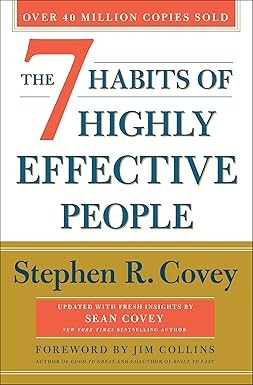
- The 7 Habits of Highly Effective People, Stephen R. Covey. I'm really enjoying this book. My takeaways from the personal habits:
- Be proactive (habit 1). You are in control, and you understand what you can and can't influence.
- Begin with the end in mind (habit 2). Be very clear on your vision and your life mission.
- Put first things first (habit 3). Plan your weeks effectively by considering all your roles, the goals for each, and allocating time to them.

Levercon builds custom, self-improving AI agents and systems for investment firms, with every output traced, verified and signed off.
Book a strategy call.
See where AI fits in your firm.
A short conversation about where AI could help your firm, what to build first, and what it would take.